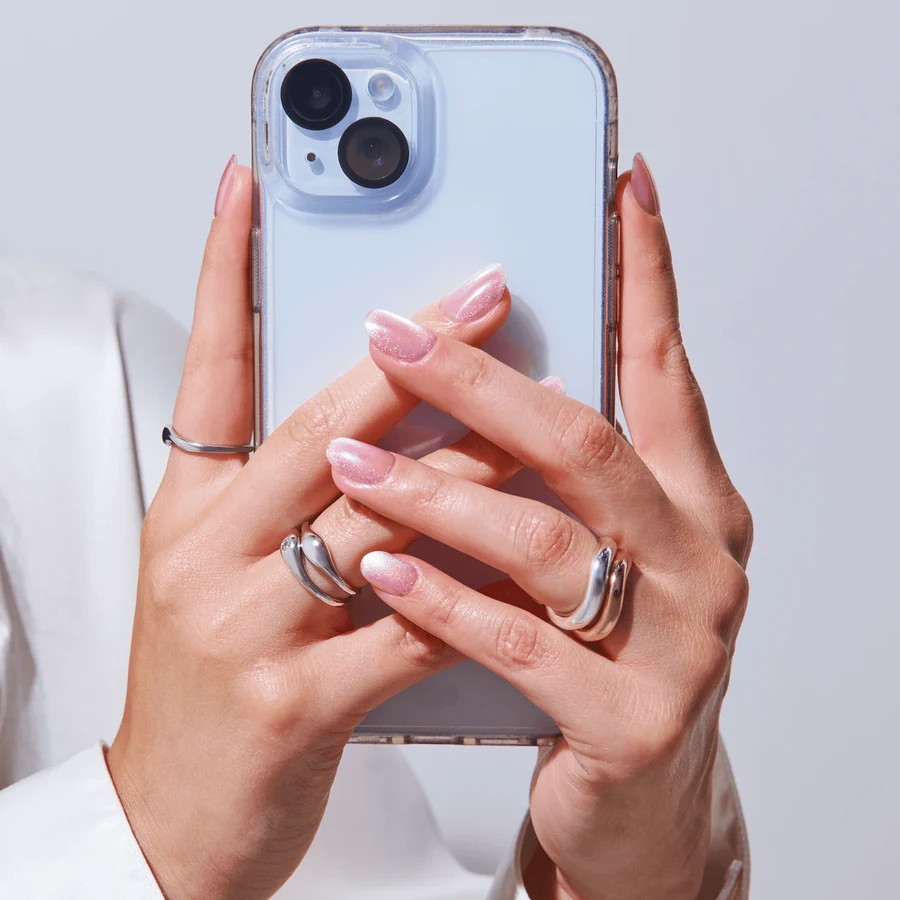
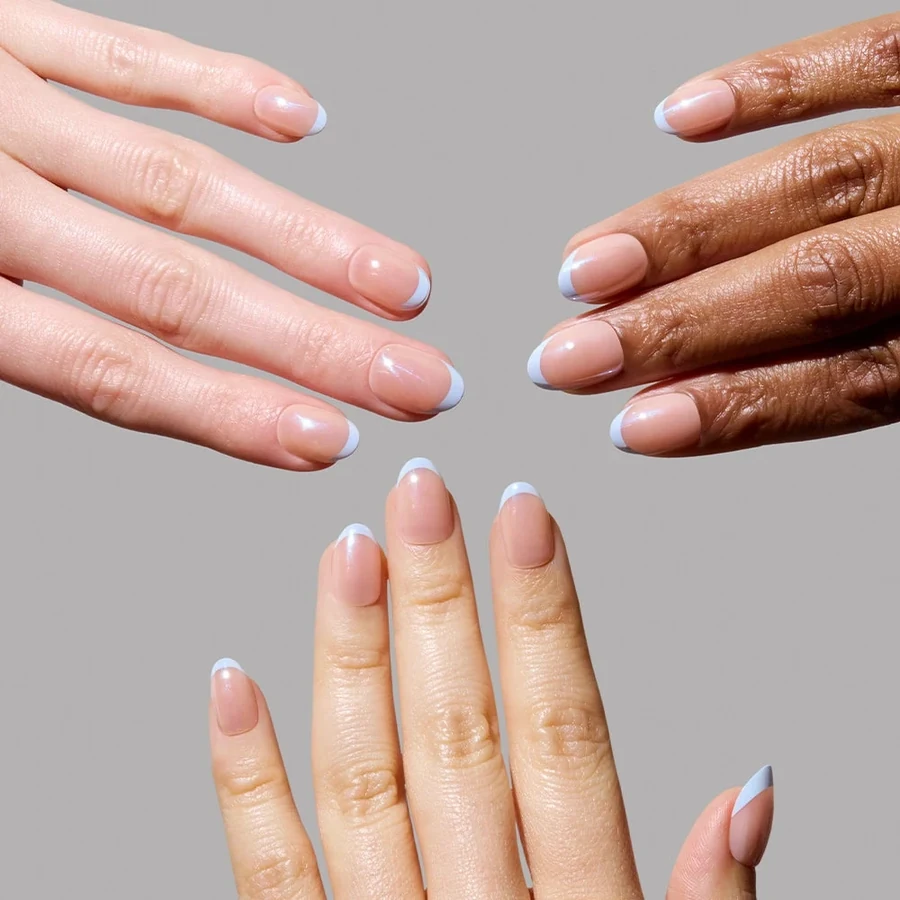
Most of the damage happens at removal rather than during the wear — but removal is not the only place either one can go wrong, and they differ before that too. An acrylic begins by filing the surface of your own nail so the product has something to grip, then has to be dissolved and filed off again, with the regrowth refilled every few weeks. Each of those steps can thin the plate. A press-on sits on top of the nail instead, so it skips the filing, and its risk concentrates in one moment: pulling it off before the adhesive has released, which takes the top layer with it.
Either can also irritate the skin around the nail, and either can seal in an infection if it goes on over a nail that is already lifting or sore. If a nail hurts, changes colour or starts separating from the bed, the answer is not a different set — it is a doctor.
That is the honest answer to the question underneath the question. If you have read that press-ons ruin nails, what you have mostly read about is people picking them off.
What an acrylic actually is
A liquid monomer and a powder polymer, mixed at the nail and hardened into a solid plastic shell that is sculpted over your own plate. It is a structure, not a covering — which is exactly why it can be shaped, lengthened and repaired, and exactly why it cannot simply be lifted off. Removal is a soak in acetone and, in practice, filing.
Buy the salon appointment when you want length or a rebuild that lasts through weeks of ordinary use.
What a press-on actually is
A finished nail, moulded already, attached to yours with either an adhesive tab or a glue. Nothing is built and nothing is sculpted; the shape was decided in a factory and the only fitting is choosing the right width per finger. It attaches to the surface of the plate rather than becoming part of it.
Buy the box when you want a manicure for an occasion, or a fortnight, and want it off again without an appointment.
Where we are not neutral
We link press-ons and we do not sell acrylics, so take the paragraph above knowing that. It is also why this page will not tell you press-ons are simply better: they are not. Nothing in a box will give you a sculpted almond an inch past your fingertip that survives a month, and if that is what you want, an acrylic is the answer and a technician is the person to ask.
What a press-on wins is the thing acrylics cannot offer at all — you can have the manicure on Friday and your own nails back on Sunday.
If you go with press-ons, the removal is the purchase
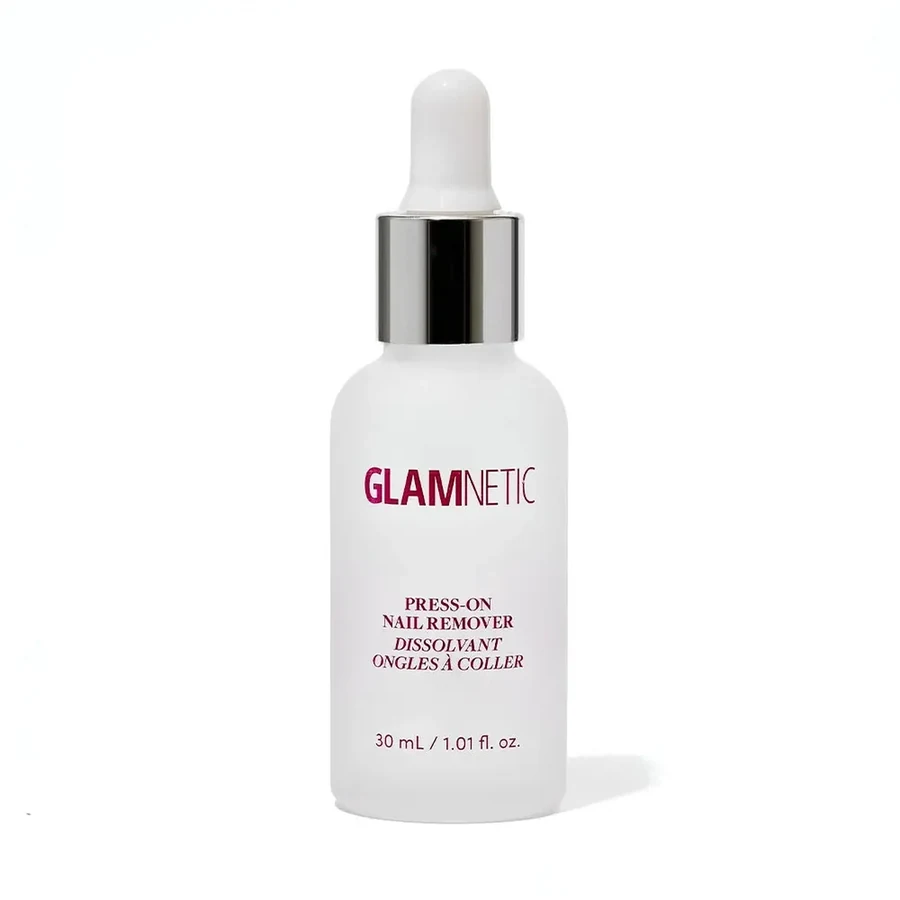
This is the part every listing leaves out. A remover serum releases the adhesive so the nail lifts off instead of tearing off, and it is most of the difference between a set that leaves your nails as it found them and a set that earns press-ons their reputation. Buy it with the first set, not after the first bad removal.
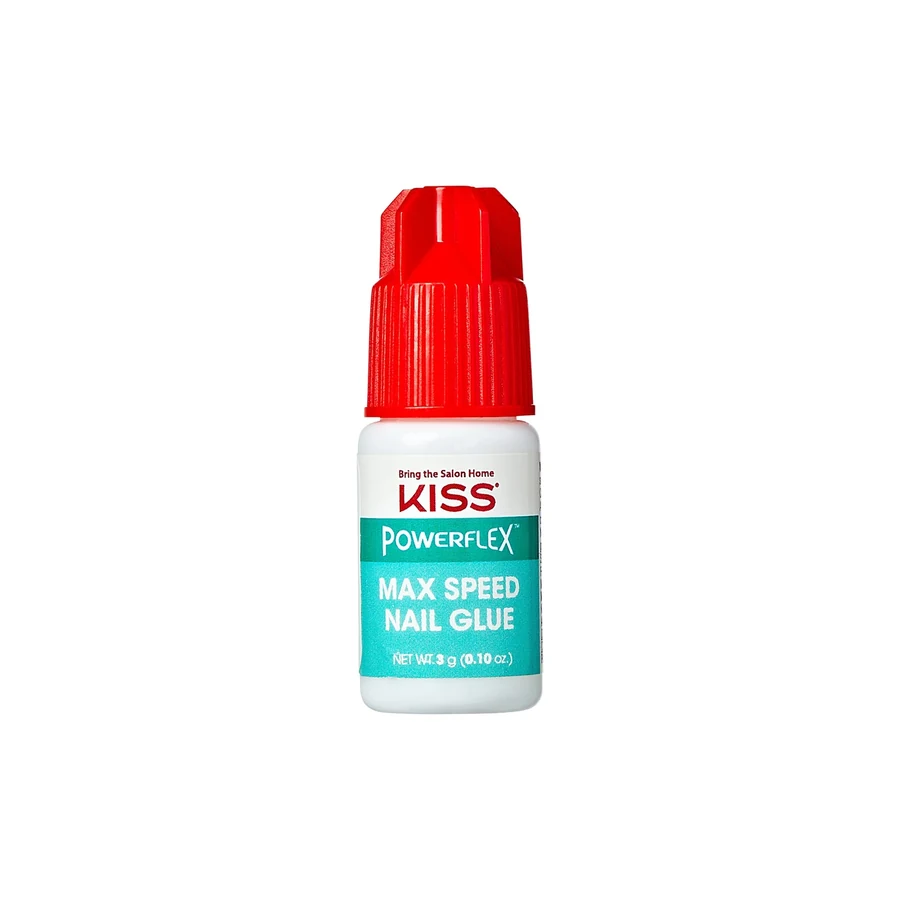
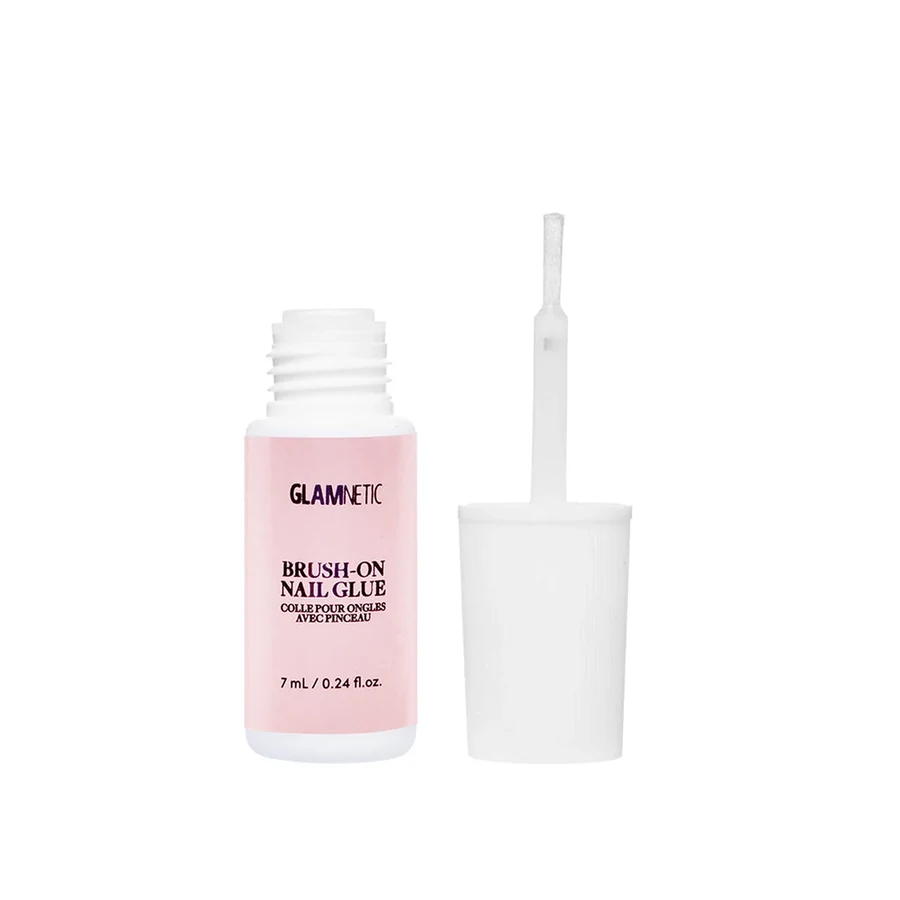
The other decision is how they attach. Pre-applied adhesive holds for days; glue buys a fortnight. Either way the removal is the same instruction — release the adhesive first, then lift. Pre-applied tabs release faster, which is the only difference. Nothing here should ever be pulled off a nail that is still holding on.