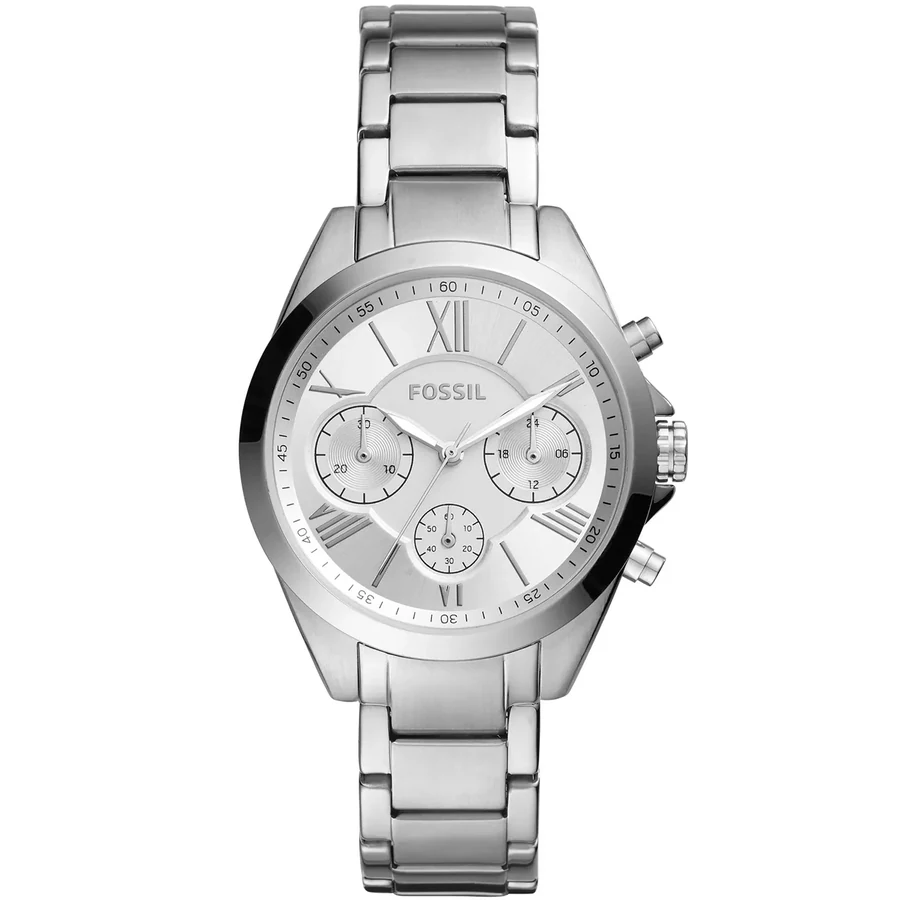
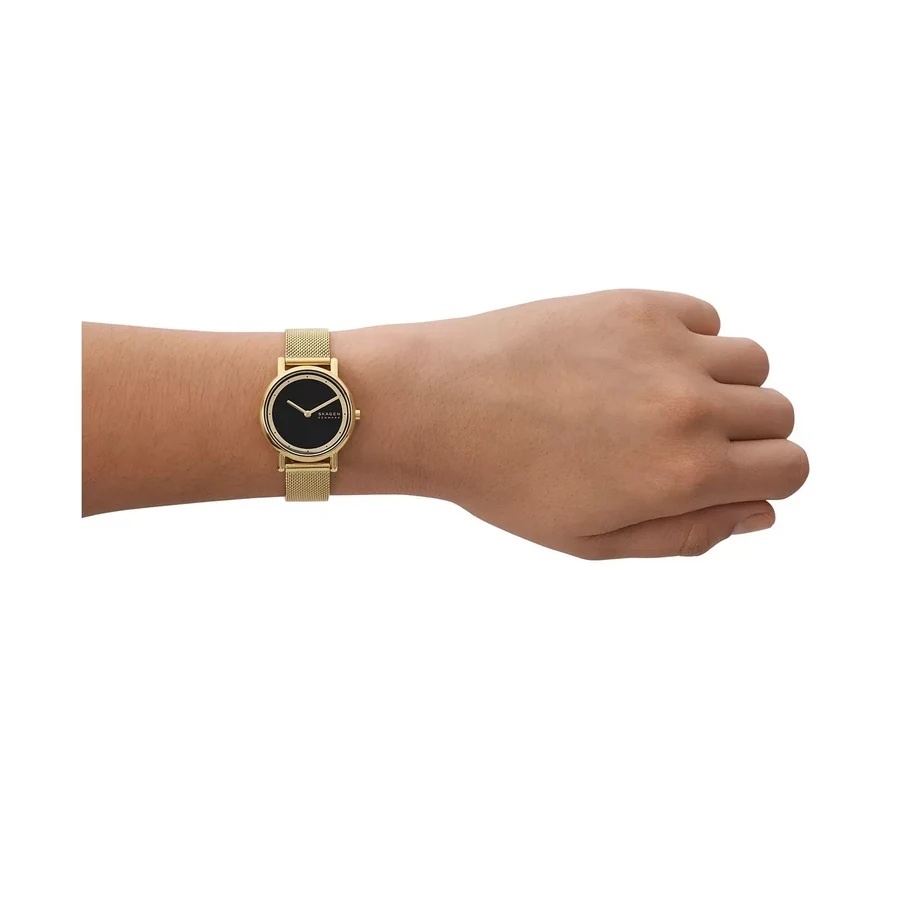
A chronograph is a watch with a stopwatch built into it: three subdials, pushers either side of the crown, and a lot of printing on the face. A two-hand watch has no seconds hand, no date and often no numerals. The chronograph is a piece of equipment worn as jewellery and the two-hand is jewellery that happens to tell the time — so the decision is really about what the rest of the outfit is doing. When everything else is plain, the chronograph is the interesting thing on you. When everything else is already saying something, the two-hand stays out of the argument.
Almost nobody uses the stopwatch, and that is not the point
The subdials on a chronograph are bought for how they look far more often than for what they do, and there is nothing wrong with that as long as it is what is happening. What they are actually buying you is density: more to look at in the same space, which is what makes a bare arm interesting. If you want that effect without the pushers, a watch with a date and a seconds hand gets you most of the way there in a flatter case.
Water resistance is the thing to check, not the movement
Both of these are quartz and both will keep time better than a mechanical watch at many times the price. What differs between dress watches is water resistance, and 30 or 50 metres means splashes rather than swimming in either case. Neither of these is a shower watch, and that is worth knowing before the first time you forget.