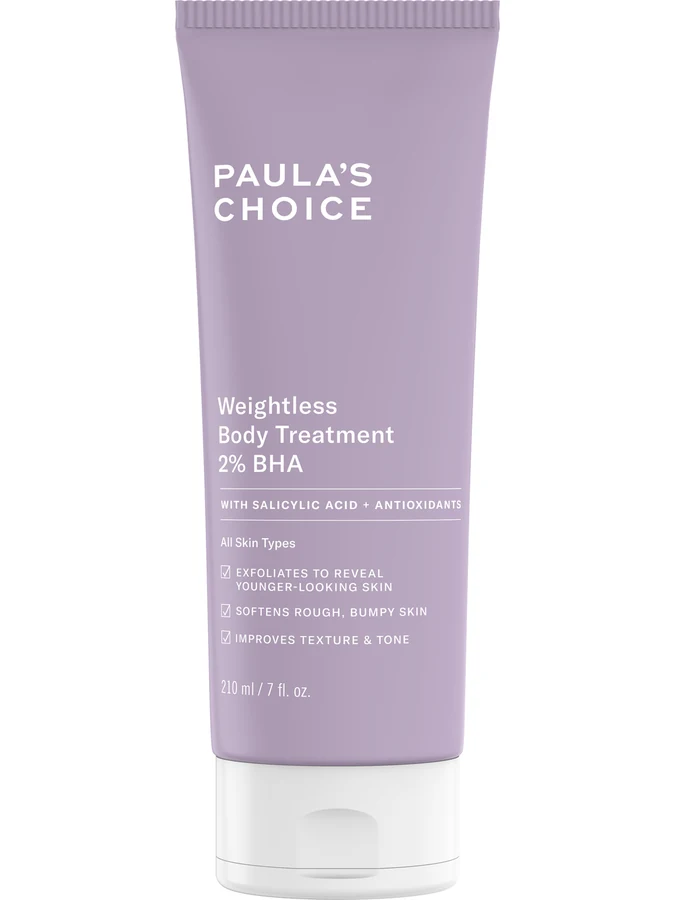
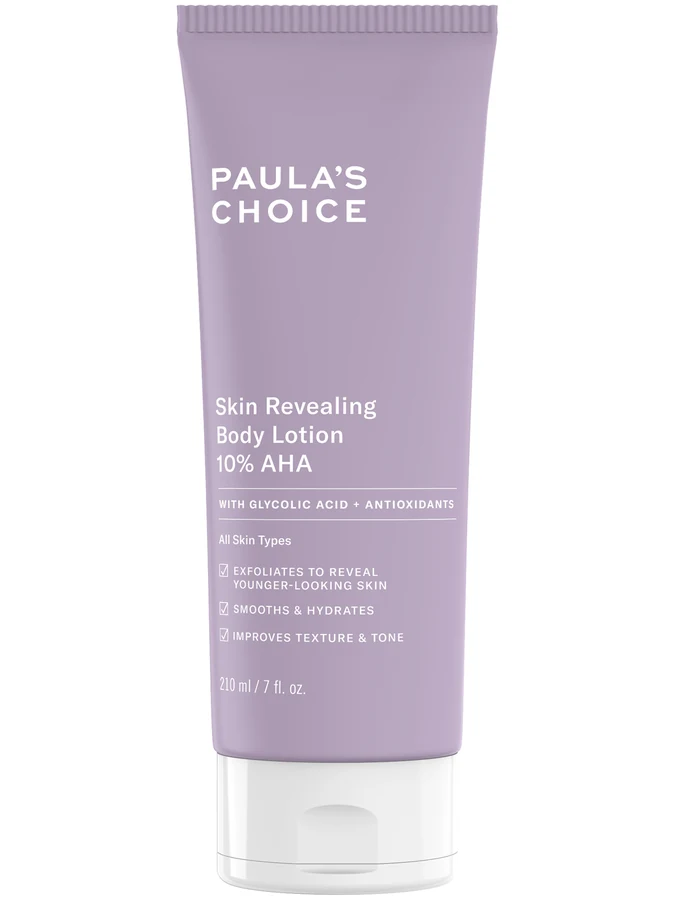
Bumps go to the BHA, roughness goes to the AHA, and the reason is solubility rather than strength. Salicylic acid is oil-soluble, so it travels down inside a follicle where a keratin plug sits — which is what keratosis pilaris and body breakouts actually are. Glycolic acid is water-soluble and works across the surface, loosening the dead layer that makes shins grey and elbows sandpapery. The 10% sounds stronger than the 2% and is, in its own direction; it simply cannot go where the 2% goes.
Using both at once is how an arm gets over-exfoliated
They are alternatives rather than a routine. Two acids on the same skin, daily, is the fastest way to a red, stinging arm that then gets treated as though the products failed. If both problems are genuinely present — bumpy upper arms and rough shins — put one on each area rather than both everywhere.
Neither one is a scrub, and that is the point
The instinct with rough or bumpy skin is friction, and friction is what turns pale keratosis pilaris bumps red. Both of these dissolve rather than abrade. If you are using either alongside a loofah or a sugar scrub, the scrub is undoing the work and causing the inflammation you are treating.
Sunscreen is not optional on either
Both acids raise UV sensitivity, and the whole reason to treat arms and legs is to have them bare. Fading the marks left behind by ingrowns or spots takes months, and unprotected sun makes those months longer — which is the part people skip and then conclude the acid did nothing.