The answer
Why do my earrings turn my ears green?
Green skin is copper. Most inexpensive earrings are a copper-bearing base metal with a thin layer of something prettier on top, and once that layer wears through, sweat and skin oils react with the copper underneath to leave a green salt on your skin. It is harmless and it washes off, and it tells you the plating has gone rather than that the metal is unusually bad. Sore, itchy lobes are a different problem with a different culprit: nickel, which is the commonest contact allergy there is. Both have the same answer, which is to buy on what the post and the body are actually made of. Sterling silver is solid metal all the way through, so there is no plating to wear off and no moment where the base metal is suddenly against your skin. Rhodium plating is the harder-wearing option among plated pieces, so it takes much longer to reach whatever is underneath. What is underneath is the part no finish tells you about, which matters if the problem is nickel rather than copper.
What answers it
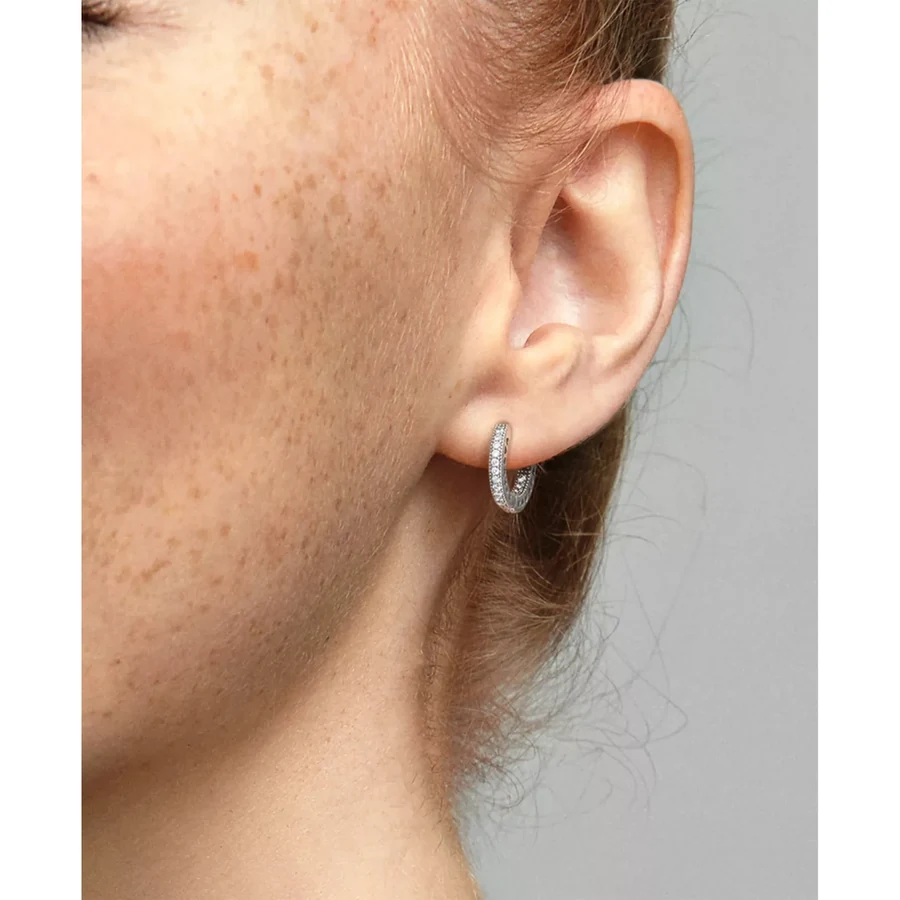 PandoraPavé Heart hoop earrings, sterling silverSterling silver, which removes the failure that causes most green marks: there is no plating, so there is no moment when it wears through to a copper core. 4.6 across 2,850 ratings, the best-evidenced earring on this shelf.Buy on Amazon
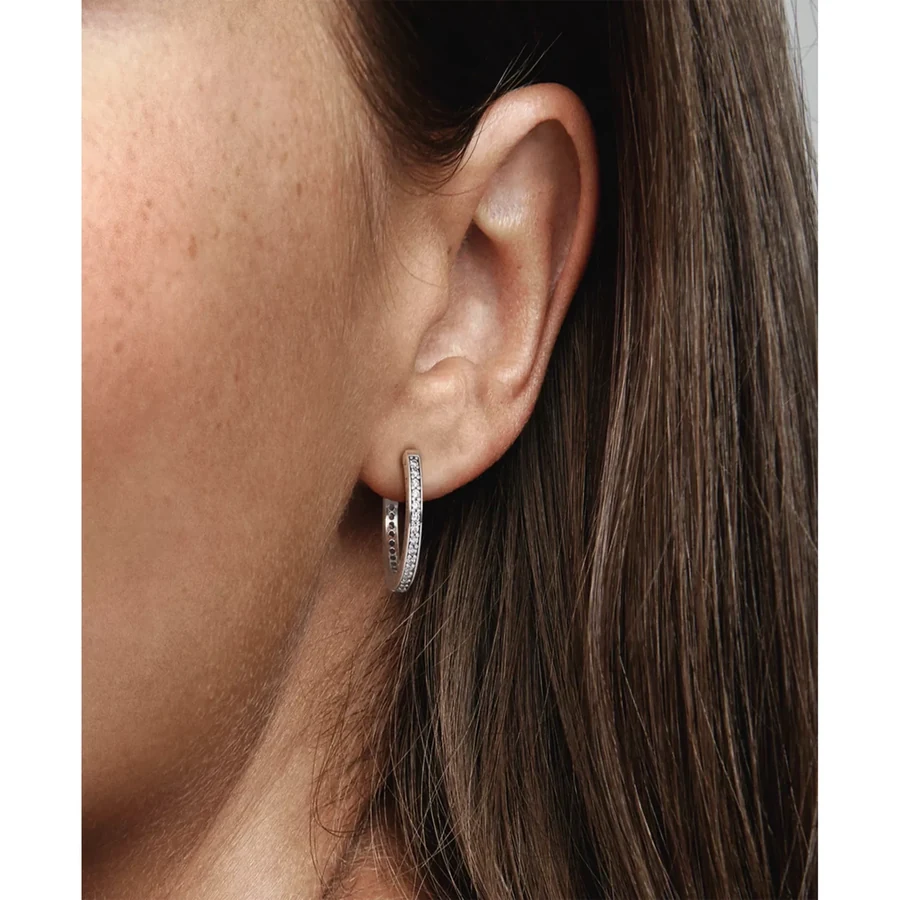 PandoraSparkle logo huggie hoops, sterling silverThe same material in a huggie, which sits tight to the lobe. Worth knowing that a snug earring is in longer contact with skin than a drop is, so material matters more here rather than less.Buy on Amazon
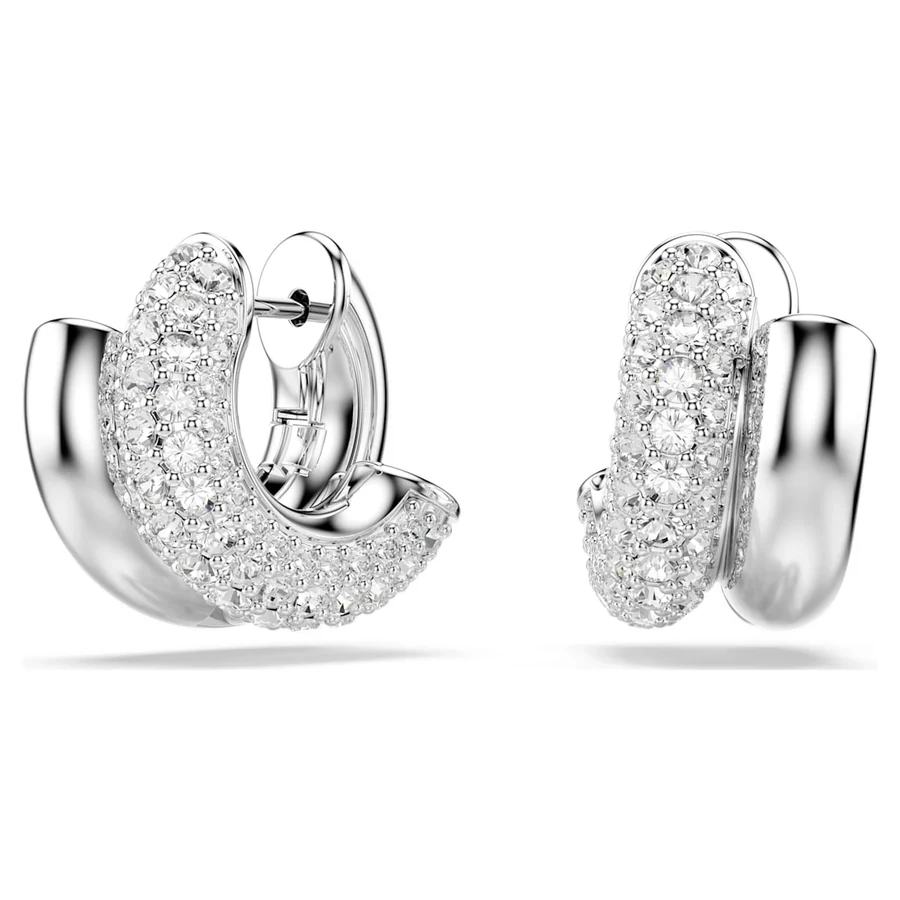 SwarovskiDextera mini crystal hoop earringsRhodium finish, and the most-reviewed piece in this section at 4,647 ratings. Rhodium is the plating that lasts longest, which is the answer to the green: a finish that survives is a finish the copper never gets past.Buy on Amazon
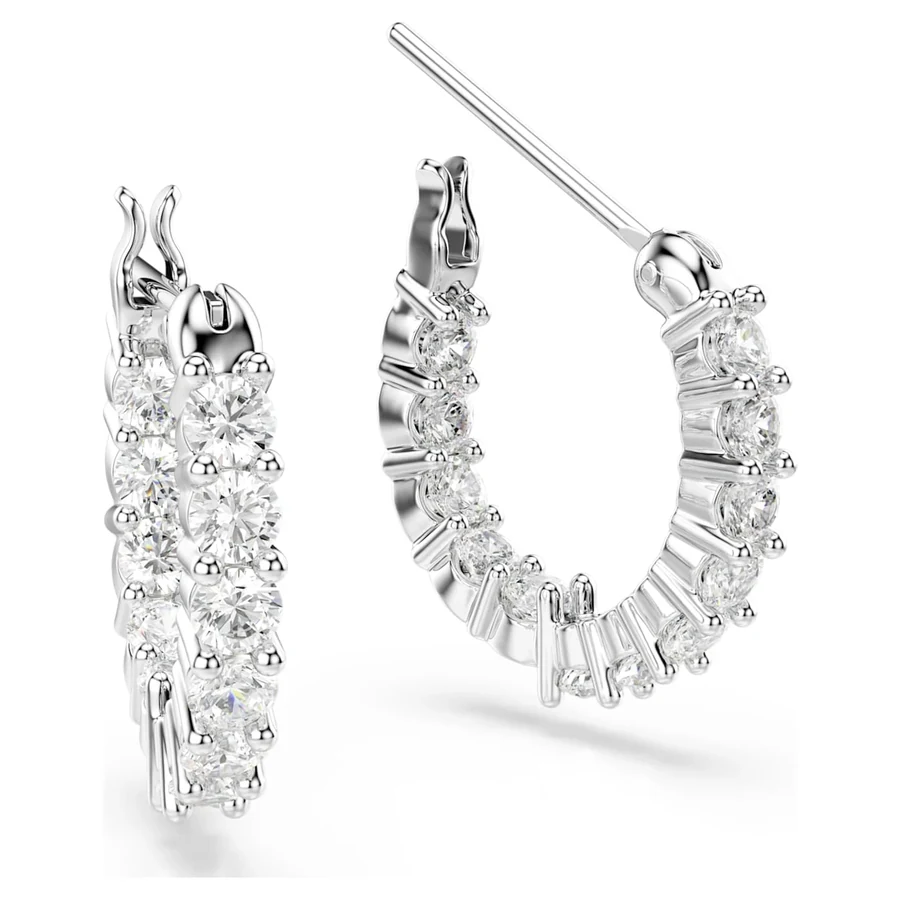 SwarovskiMatrix Vittore crystal hoop earringsA larger rhodium-plated hoop for the same reasons. Plated rather than solid, so it will wear eventually -- but rhodium wears slowly, and a hoop touches the lobe over less of its length than a stud back does.Buy on Amazon
Prices live on Amazon, where they change hourly — so we never quote one. Every product here is a brand we would name out loud.
Green is a chemistry problem, not a hygiene one
Copper reacts with the acids in sweat and with anything else on your skin -- hand cream, perfume, the chlorine in a pool -- to form copper salts, which are green. The reaction needs moisture, which is why it shows up in summer, at the gym, and on people who simply have more acidic skin than average. It is not a sign the earrings are dirty and it does not mean anything is wrong with you.
Sore lobes are usually nickel, and nickel is not the same problem
Nickel is used in base metal alloys and in some solders, and roughly one person in ten reacts to it. That reaction is redness, itching and sometimes weeping, and it can start years after you first wore something -- contact allergies develop with exposure rather than being present from the beginning. If your ears are sore rather than stained, better plating is not the fix, and this is the part where this page cannot pick for you: a finish describes the outside, and nickel is a question about the alloy underneath and about the post. Rhodium and gold plating both say nothing about it. Buy on a listing that states nickel-free in its own words, or on a post in implant-grade titanium, which is nickel-free by specification. Surgical steel is not the same answer -- it contains nickel, bound in the alloy and usually tolerated, but not absent. Treat anything that does not say as unknown.
Sterling is not copper-free, and it is still the better answer
Worth saying plainly, because it is the obvious hole in the advice above: sterling silver is 92.5 per cent silver and the rest is usually copper. It is not a copper-free metal. What it does not have is a copper CORE under a thin decorative skin, which is the thing that produces a green ear -- the failure is not that copper exists in the alloy, it is that plating wears through and puts a copper-heavy base metal directly against damp skin. Sterling also tends to discolour differently: it tarnishes to grey and black rather than green, because that is silver reacting with sulphur rather than copper reacting with sweat. If your skin marks even against sterling, the metals with no copper in them at all are platinum, palladium and implant-grade titanium, and they are the ones to look for.
What the words on the label actually promise
Sterling silver means the piece is 92.5 per cent silver throughout. Gold-plated and gold-filled are both layers over a base metal and gold-filled is the thicker of the two. Rhodium plating is a hard white metal from the platinum family, used over silver to stop it tarnishing and over base metal to make it wearable. Base metal, alloy and fashion jewellery are all ways of saying the material is not disclosed.
What makes plating last longer
Plating wears through friction and dissolves in chemicals, so the two habits that matter are taking earrings off before showering or swimming, and putting them on after perfume and hair spray rather than before. Storing them dry rather than in a bathroom helps. None of this saves a very thin plating, but it roughly doubles the life of a good one.
The stopgap that works and the one that does not
Clear nail polish on the post is the internet's answer and it does work, for about a week, and it chips into the piercing channel. It is a fix for one evening, not a solution. Sterling posts sold separately for pierced ears are a real answer if you like the earring and not the post, but they only help where the post is the part touching you.
Questions
- Does the green mean the earrings are fake?
- No. A green mark means copper has met damp skin, which is what happens once plating wears through to a copper-bearing base -- true of a great deal of jewellery at every price. Solid gold does not do it. Sterling has no copper core to wear through to, and rhodium-plated pieces do not do it while the plating holds, but sterling is an alloy with copper in it and can still mark some skin. The difference is a slow one rather than an absolute one.
- Can I stop sterling silver going black?
- That is tarnish rather than the green reaction -- silver reacting with sulphur in the air -- and it polishes off. Storing pieces in a closed bag rather than open on a dish slows it a great deal, because it is exposure to air that does it.
- Are surgical steel and titanium better?
- For a new or sensitive piercing, yes, and they are what a piercer will use -- but they are not interchangeable. Implant-grade titanium is nickel-free by specification; surgical steel contains nickel, bound in the alloy and tolerated by most people who react to plated jewellery, though not by everyone. Neither is often what a dressy earring is made of, which is why sterling is the practical answer for jewellery you wear out and titanium is the answer for something that stays in.
Your turn
What should we dress next?
An occasion you cannot find anything for, or a product you want us to look at properly.